Gym member retention starts with the next class
A new member may enjoy their first BJJ class and still struggle to come back. They leave unsure which session to book, their usual evening gets busy, or the next class on the timetable sounds too advanced.
Help them choose their next class before they leave. Over the following month, staff can check whether that routine fits and offer another option when it doesn't.
Before they leave, make the next class clear
Ask which days normally work for them and recommend a suitable next class. Show them where to find it and how to book. A member who can choose between Tuesday fundamentals and Saturday beginners has a more useful next step than “come whenever you like.”
Introduce the instructor they are likely to see next. Explain anything they need for that session, such as a gi or the option to borrow equipment. Keep the information close to the decision; a long welcome message can bury the class link.
For a child's membership, check that the guardian knows which account handles booking and payment. The child who trains and the adult receiving the message may be different people.
Agree on a routine during the first week
Ask how often the person expects to train. Someone aiming for one class a week should not appear to be falling behind because another beginner attends four.
Record a simple expectation the team can use: “usually Tuesday evenings” or “one weekend class.” Use it when you check in with them, and let them change their mind. If the timetable doesn't fit their life, another booking reminder won't fix it.
Give one person responsibility for checking new members' progress. An owner can delegate the review to a manager, but “everyone keeps an eye on it” makes it easy for an absence to go unnoticed.
Check the people who haven't returned
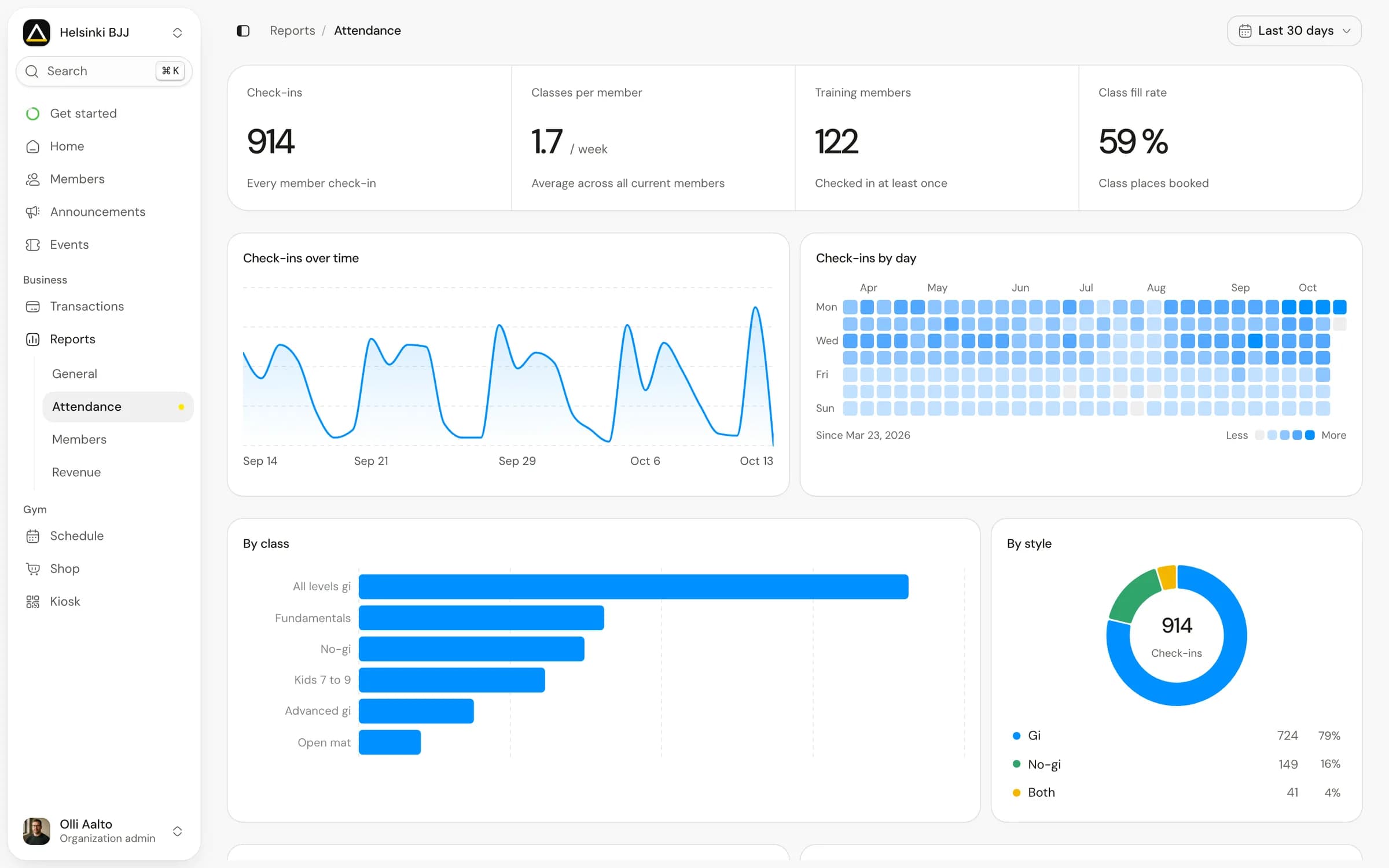
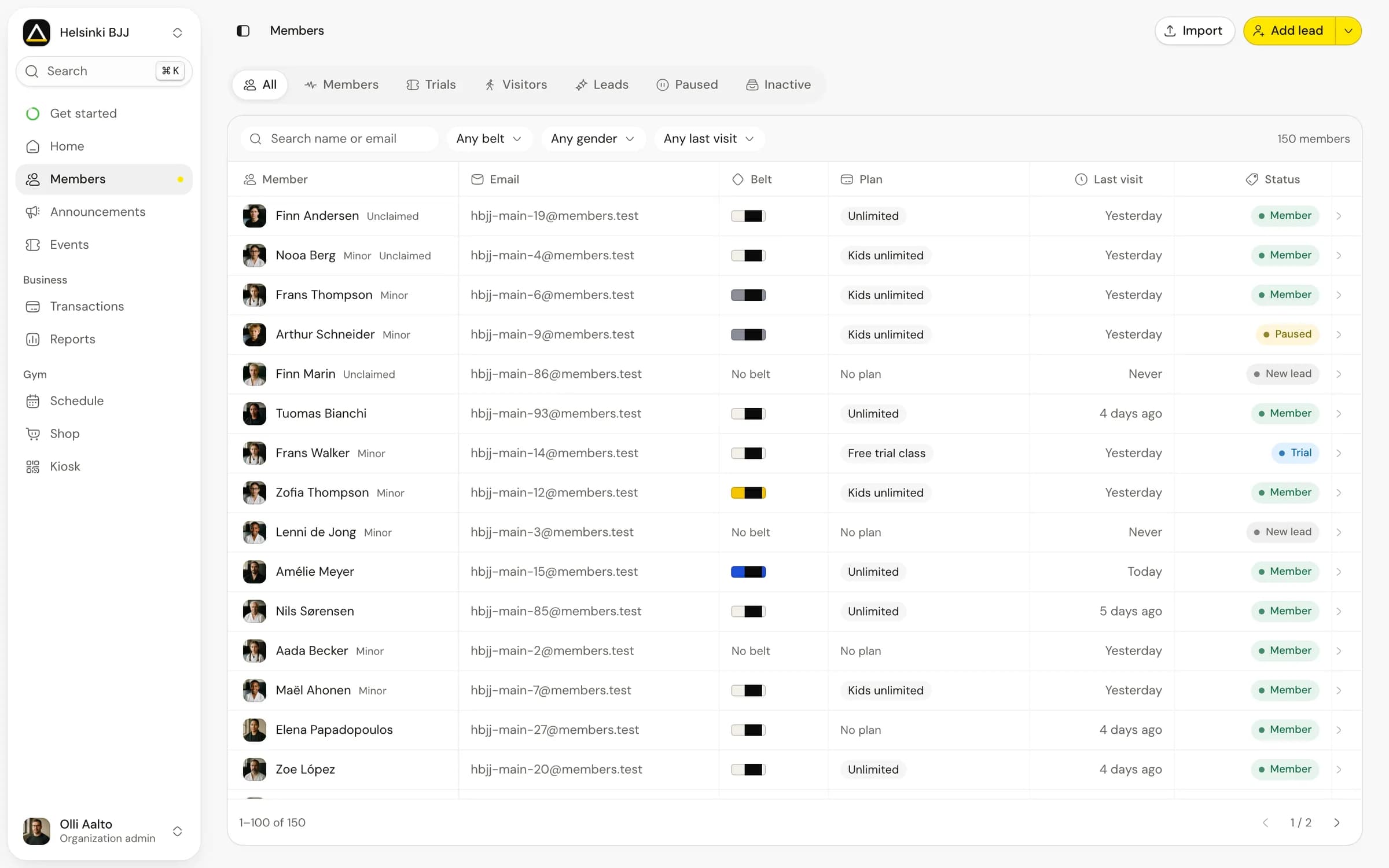
Once a week, compare the new-member list with actual attendance. Confirm the record before contacting someone about an absence: a booking alone won't tell you whether they trained. The attendance guide explains which records to check.
Look for a change you can explain. A member who usually trains on Tuesday and misses that class may simply be travelling. Someone who attended an introduction but never returned may need a clearer route into the regular timetable.
A short personal message can open the conversation:
Hi [first name], how did your first class feel? You mentioned Tuesday evenings usually work. Would you like help picking your next session?
If they have already missed their planned return:
Hi [first name], just checking whether you found a class time that works. I can help you choose another session if your schedule has changed.
Have a staff member adapt the message to the conversation they had at the gym. Follow the member's communication preferences and stop chasing when they ask you to.
Give each week a different job
A short weekly review gives the team time to act on what members tell them.
| When | What staff should establish |
|---|---|
| First visit | The member knows the next suitable class and how to book it |
| End of week one | Their proposed routine fits the timetable |
| Week two | Missed visits have a checked record and a named person to follow up |
| Weeks three and four | The member knows an instructor, understands their plan and has a workable next month |
A weekly member may have trained only a few times by the end of the month, so adjust the review to their routine.
When someone says the sessions feel too advanced, take that feedback to the instructor. When they say the only suitable class is full, review the schedule and waitlist. A retention message is useful only if the gym can do something with the answer.
Keep billing problems visible to the right person
A failed payment and a member choosing to leave are different situations. Route a payment issue to the staff member who can explain the invoice or help the payer update their details. Don't ask an instructor to improvise a billing conversation on the mat.
Likewise, record a planned pause accurately. If your weekly list treats everyone on a pause as a disengaged member, staff spend time sending messages that ignore what the person already told the gym.
Measure whether the routine is working
Suppose 20 new members have all reached the end of their first 30 days, and 15 have made a second recorded visit during that period. Their second-visit rate is 15 divided by 20, or 75%. This is an example calculation, not a benchmark or a Matpass result.
That number tells you whether people returned at least once. It doesn't tell you whether they still pay or train regularly, so track those questions separately and label each measure.
Don't include someone who joined yesterday in that completed 30-day group. Keep trials separate from paid memberships if they have different starting points, and decide how pauses affect your definition before comparing months.
Alongside the number, keep a short list of reasons people gave for not returning. If several mention class times, an additional welcome email will not solve the scheduling problem.
For your next weekly review, pick the members still in their first month and give each missed return a named follow-up owner. Matpass's attendance history and retention reports can help build that list; join the waitlist to try them when access opens.